
IPL match betting starts before the first ball, but the best decisions are not made from team names alone. Cricket fans need team news, pitch context, role clarity, price movement, and a plan for what changes once the match goes live.
This Vegas11 guide explains a cleaner way to compare pre-match and live IPL markets. It is written for fans who want structure before they open the market page, not a rushed reaction to every scoreboard change.
Reviewed by Vegas11 Editorial Team. Team lists, venue conditions, and market rules can change near match time, so readers should check the live match page before making any selection.
Quick Answer
Before an IPL match bet, check confirmed playing XIs, batting depth, bowling roles, pitch behavior, venue history, and whether the current price still fits the match view. For live betting, add delay checks and stop if the pace becomes hard to read.
| Stage | Main check | Why it matters |
|---|---|---|
| Pre-match | Team news and role clarity | Missing players can change batting and bowling balance |
| Toss | Batting order and pitch use | Some venues change after innings one |
| Powerplay | New-ball pressure | Early wickets can change both teams’ plans |
| Live phase | Price movement and match rhythm | Fast markets need slower decisions |
Start With Team News
Team news is the foundation. Confirm the playing XI, substitutes if applicable, injury updates, and whether key roles are covered. A star name is not enough if the side has lost balance in bowling or finishing.
Fans should also check batting depth. A side with one extra all-rounder may handle a chase differently from a side with a long tail. Those small role differences can decide whether a price is still sensible.
Read the Pitch and Venue
Pitch context affects how a match should be read. A surface with grip may support slower bowling. A flatter pitch may reward powerplay aggression. Dew can change second-innings comfort, especially in night matches.
Venue history helps, but it should not be used blindly. Conditions on the day, square boundaries, weather, and team composition can make the current match different from older scorecards.
| Context point | What to review | Better question |
|---|---|---|
| Pitch | Pace, bounce, grip, and visible dryness | Will batting get easier or harder? |
| Boundary size | Short side and hitting zones | Which batters can use the ground shape? |
| Bowling roles | Powerplay, middle, and death-over plans | Who handles the pressure overs? |
| Dew/weather | Second-innings control and ball grip | Will the toss change the plan? |
Price Movement Needs a Reason
A moving price is not a reason by itself. The fan should know why it moved. Was it team news, toss result, weather, pitch read, or public reaction? Without a reason, the movement can become noise.
Before selecting, write the match view in one sentence. For example: one side has stronger death bowling, or one side has deeper batting for a chase. If the current price does not fit that view, skip it.
- Check the confirmed XI before judging the market.
- Read pitch and boundary context before the toss becomes the whole story.
- Do not chase a price movement without knowing the reason.
- Set the live-betting limit before the first over.
- Stop if the screen pace becomes harder to follow.
Pre-Match Betting Versus Live Betting
Pre-match betting gives more time to think. Fans can compare teams, read conditions, and avoid screen pressure. The weakness is that late team news or toss impact can change the match view after the selection is made.
Live betting gives fresh information, but it moves faster. A player can respond to what is happening, yet the market may adjust quickly and the feed may not be perfectly aligned. That makes discipline more important.
Neither format is automatically better. The right format is the one the fan can read calmly with the information available at that moment.
How to Build a Match View
A match view should be short and testable. It should explain why one side has an edge, what could break that view, and which match phase matters most. If the view cannot be written clearly, the selection is not ready.
For example, a fan may believe one team has stronger death bowling. That view should be tested against the batting depth of the opponent, boundary size, dew, and which bowlers are actually selected.
Live Betting Rules for IPL Fans
Live betting should start with a limit and a stop rule. Decide before the match which phases are allowed: powerplay, middle overs, death overs, or specific player matchups. Do not open every market just because it appears.
Delay is also important. If the score update and broadcast do not match, skip the market. A live price only makes sense when the fan understands the current ball, not a delayed version of it.
Common Match Betting Mistakes
The first mistake is using team popularity as analysis. The second is ignoring the toss completely. The third is overvaluing the toss while ignoring the actual XI. Good match reading balances all three.
Another mistake is changing the plan after every boundary. Boundaries matter, but a match can still follow the original view if the roles and remaining overs support it.
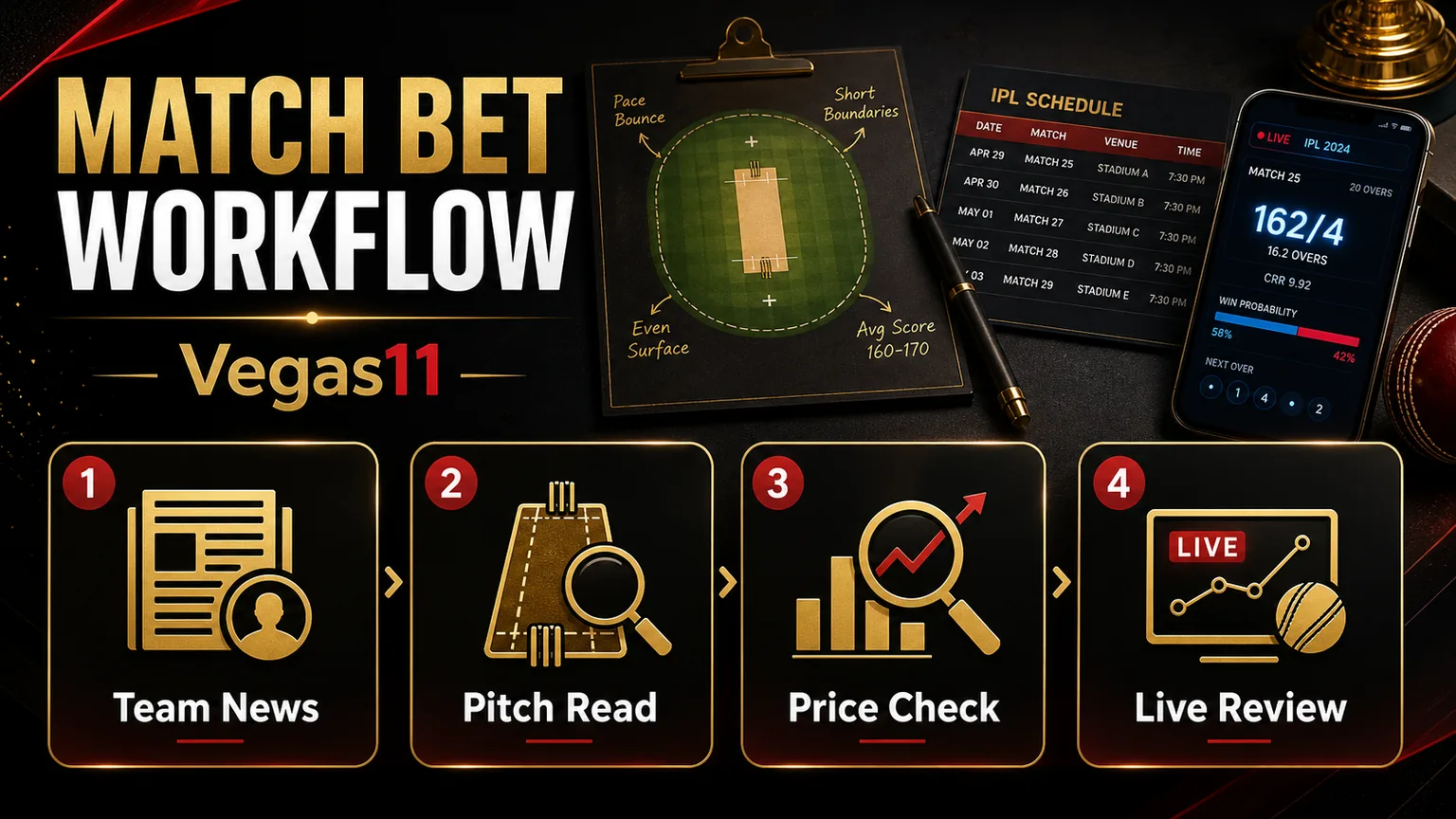
A Practical Match Betting Workflow
Start with team news. Then check pitch, boundary shape, weather, and likely bowling roles. After that, compare the market price with the match view. If the price does not fit, wait.
Once the match begins, review only at planned checkpoints: after the powerplay, around the middle overs, and before the death overs. This keeps live decisions from becoming one-ball reactions.
After the match, review whether the decision was based on a clear view or a late emotional reaction. This habit improves future match reading because it separates useful cricket information from noise.
When to Skip the Market
Skipping is sensible when team news is unclear, the pitch report conflicts with visible conditions, the price has moved without a clear reason, or the live feed feels delayed. A skipped unclear market is a clean decision.
A fan should also skip when the match view depends on one assumption that cannot be checked. If the whole selection needs one player to perform a role he may not actually get, the plan is too narrow.
Use Review Points Instead of Constant Reactions
A match does not need to be judged after every delivery. Planned review points make the session easier to control: after the toss, after the powerplay, halfway through the innings, and before the death overs.
At each review point, ask whether the original match view is still alive. If it is, there may be no reason to change anything. If it is broken, decide whether the new information is strong enough to create a fresh view.
This keeps IPL match betting from becoming a stream of emotional updates. The fan is still reading the match, but the decisions are attached to clear checkpoints.
Source and Update Note
This guide focuses on practical IPL match betting checks: team news, pitch context, role clarity, price movement, live delay, and session discipline. Current Vegas11 market rules and match information should be checked before play.
Read Next
- IPL Micro Betting Guide for Cricket Fans
- IPL Bonus Guide for Filipino Players
- IPL 2025 Comeback Matches Fans Still Talk About
- IPL Final Weather Watch: What Cloudy Conditions Can Mean
FAQ
What should fans check before an IPL match bet?
Check confirmed team news, pitch conditions, venue history, role clarity, recent form, and whether the price still fits the match view.
Is live betting better than pre-match betting?
Neither is automatically better. Pre-match betting gives more time to think, while live betting gives fresh match information but moves much faster.
Why does team news matter so much in IPL betting?
Team news can change batting depth, bowling options, fielding strength, and death-over roles, which all affect how the match may unfold.
How can players avoid rushed live decisions?
Write the match view before the game, define the price range, skip unclear markets, and stop when the screen pace becomes difficult to read.
The Practical Takeaway
A better IPL match betting decision starts with a written view, not a screen reaction. Check the team, read the pitch, compare the price, and decide where the plan becomes invalid.
If the match moves faster than the view can be updated, step back. Clear cricket reading is more valuable than constant market movement.