
IPL 2025 produced the kind of comeback matches that fans keep replaying because they were not only about late boundaries. The best turnarounds were built from pressure, wickets, field placement, matchups, and batters who understood when the game had changed.
For Vegas11 readers, the useful lesson is not to treat a comeback as magic. A comeback becomes readable when fans track the scoreboard, the wickets left, the bowling options, and the final-over roles before reacting to the result.
Reviewed by Vegas11 Editorial Team. Match conditions, scorecards, and player roles should be checked against current official match information when fans compare older IPL moments.
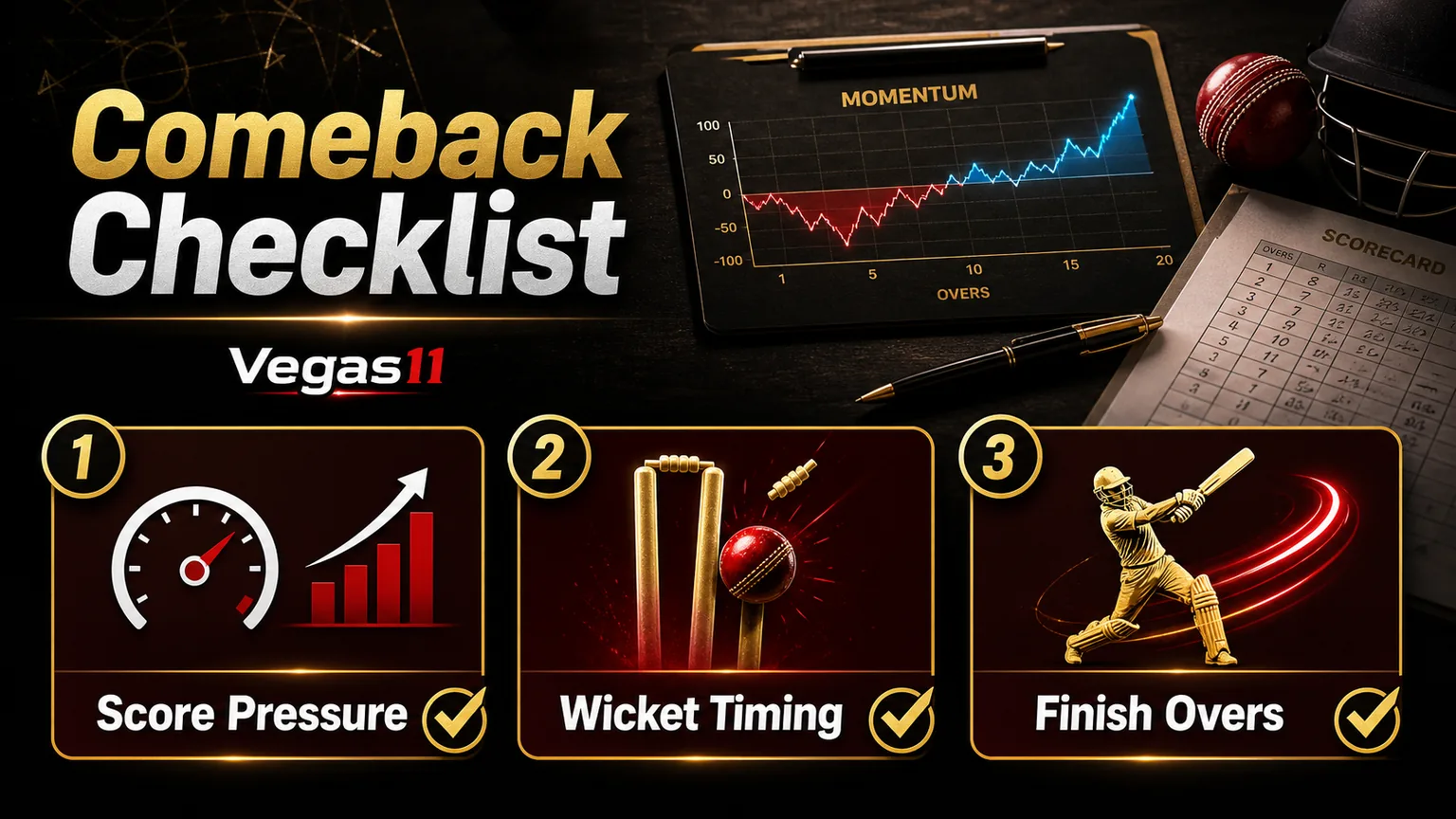
Quick Answer
The most memorable IPL 2025 comebacks usually shared three traits: one side looked behind on the scoreboard, a pressure event changed the middle overs, and the finishing phase was handled calmly instead of wildly. Fans should read those turns through match context, not only the final margin.
| Comeback signal | What fans should watch | Why it changes the story |
|---|---|---|
| Wicket timing | Two quick wickets after a set partnership | The required rate can become less important than batting depth |
| Bowling change | A matchup used at the right over | One quiet over can reset pressure |
| Finish-over role | Which batter controls overs 17 to 20 | Calm shot selection often decides the chase |
| Field pressure | Singles blocked and boundary options narrowed | A team can appear ahead while losing control |
Why Comebacks Stay in Fans’ Memory
A comeback sticks because the match gives fans a clear before-and-after moment. One over feels normal, then a wicket, a dropped chance, a bowling change, or a brave chase changes the entire reading of the game.
That does not mean the turnaround happened from nowhere. In T20 cricket, comeback pressure is often built earlier. A quiet over in the middle phase, one batter surviving a tough matchup, or a bowler saving an over for the death can make the final swing possible.
Fans who only watch the last two overs miss the preparation. The better reading starts earlier, when the chasing side decides whether to protect wickets or push the rate, and when the defending captain chooses which bowler must handle the hardest phase.
The Scoreboard Can Be Misleading
A team can look behind but still have the right players at the crease. Another team can look ahead but have already used its strongest bowling options. That is why comeback matches are not judged by runs alone.
The required rate matters, but it should be read with wickets in hand, boundary size, batting roles, and who still has overs left. A chase with two set batters feels very different from the same rate with new batters starting against specialists.
| Scoreboard view | Hidden context | Better fan question |
|---|---|---|
| Required rate is high | Set batters may still control matchups | Who has the easier boundary option? |
| Defending team looks ahead | Best overs may already be used | Who bowls at the finish? |
| Chasing side lost wickets | One finisher may still be in position | Can that player face enough balls? |
| Powerplay looked one-sided | Middle overs can slow the leader | Can spin or pace change the rhythm? |
How Wickets Change a Chase
Wickets are not equal. Losing an opener in the powerplay is different from losing the set batter in the seventeenth over. A comeback often begins when the wicket timing forces one team to change its role distribution.
If the chasing side keeps the right finisher, the match can remain alive even when the rate climbs. If the defending side removes that batter, the scoreboard pressure becomes much harder to absorb.
This is why fans should track who is out, not only how many are out. The same score can mean two different things depending on which roles are still available.
Bowling Changes That Create a Turnaround
Captains often shape comebacks with bowling choices. A spinner may slow the middle overs, a pace bowler may attack the hard length, or a death specialist may be saved for the moment when a set batter wants to finish.
The important point is timing. A bowling change can look ordinary on the scorecard but feel decisive because it arrives exactly when a batter was ready to shift gears.
Fans can read this by asking one simple question: did the new bowler force the batter to change the shot plan? If yes, the comeback may have started before the scoreboard fully showed it.
Finish Overs Need More Than Power
The final overs of a comeback are not only about hitting. Good finishers identify which bowler to attack, where the safest boundary is, and when one run is better than a forced shot.
A comeback chase can fail when a side treats every ball as a boundary ball. It can succeed when the striker keeps the field moving and makes the bowler defend several options.
That is why some quiet-looking singles are important. They keep the stronger batter on strike, protect the partnership, and make the final over less crowded with pressure.
What Fans Should Track During a Comeback
A practical comeback checklist helps fans stay clear while the match gets loud. Start with wickets in hand. Then look at who is set, who still has overs to bowl, and whether the batting side has enough boundary options.
The next check is pace. If the batting side needs a big over, does it have a matchup that supports that push? If the defending side needs control, does it have a bowler who can keep the ball away from the preferred hitting zone?
- Track which batter is set, not only the team score.
- Check which bowlers are still available for overs 17 to 20.
- Watch whether singles are keeping the chase calm.
- Notice if fielders are protecting the right boundary.
- Avoid judging the match from one ball without context.
Common Fan Mistakes
The first mistake is calling the match over too early. T20 cricket changes quickly when wickets, dew, fielding pressure, or one matchup shifts. The second mistake is overreacting to one boundary without checking whether the next over is still difficult.
The third mistake is ignoring roles. A lower-order batter can hit powerfully, but a planned chase usually needs someone who reads the field and keeps the over under control. Comebacks are usually a mix of skill, patience, and pressure mistakes.
How This Helps With Future IPL Viewing
Fans can use IPL 2025 comeback memories as a viewing tool for future matches. Instead of asking only who is ahead, ask which side has the clearer path from the current ball to the final over.
That path includes batting depth, bowling options, fielding pressure, and the venue. If the path is still open, the match is not finished. If the path is closed, the score may look alive while the tactical options are fading.
This is the difference between watching highlights and reading the match. Highlights show the turning point; match reading explains why the turning point had room to happen.
Source and Update Note
This guide is written as a practical fan-reading guide for IPL comeback matches. Readers should use current scorecards, official match reports, and team news when checking specific fixtures or player roles.
Read Next
- IPL Micro Betting Guide for Cricket Fans
- IPL Match Betting Guide for Cricket Fans
- IPL Bonus Guide for Filipino Players
- IPL Final Weather Watch: What Cloudy Conditions Can Mean
FAQ
What makes an IPL comeback memorable?
A comeback usually becomes memorable when the match turns after a clear pressure point, such as a wicket burst, a tight bowling spell, or a calm finish after the chasing side looked behind.
Should fans judge a comeback only by the final score?
No. The final score matters, but the middle overs, matchups, required rate, and wicket timing often explain why the turnaround felt dramatic.
How can cricket fans read momentum during an IPL chase?
Track wickets in hand, required rate, boundary options, bowling matchups, and whether the batting side still has a finisher at the crease.
Why do comeback matches matter for match reading?
They show that cricket momentum is layered. One over can change pressure, but the real story is usually built from several smaller decisions.
The Practical Takeaway
A great IPL comeback is rarely one lucky swing. It is a chain of small decisions that become visible when pressure reaches the final overs. Fans who track wickets, bowling resources, and finishing roles will understand the match sooner.
Use the comeback checklist before reacting to a live score. If the path is still open, the match can turn. If the path is gone, even a loud over may only delay the result.