
Mumbai Indians’ Retention Dilemma Ahead of IPL 2025 Auction
With the IPL 2025 auction looming and the deadline to submit retentions set for October 31, Mumbai Indians face several tough decisions. The team can retain a maximum of six players, including those kept through the Right to Match (RTM) option. Despite a mixed performance last season, Mumbai Indians boast one of the strongest squads in the league. However, some key decisions need to be made regarding their core group and leadership.
The Big Four: Bumrah, Suryakumar, Hardik, and Rohit
Mumbai Indians’ “Big Four” includes Jasprit Bumrah, Suryakumar Yadav, Hardik Pandya, and Rohit Sharma. All four players bring immense value to the franchise, but the team must decide whom to prioritize.
Jasprit Bumrah is a no-brainer for retention. His skills as a pace bowler are unmatched, and he remains an integral part of Mumbai’s plans. Bumrah should likely be the first player retained, ensuring stability in the bowling department.
Suryakumar Yadav, currently India’s T20I captain, will also be high on Mumbai’s retention list. His innovative and aggressive batting style is a crucial asset in T20 cricket. Alongside Bumrah, Surya provides the team with a solid Indian core.
Hardik Pandya, Mumbai’s captain from last season, continues to be a game-changer with his all-round abilities. After his high-profile trade from Gujarat Titans, Hardik has taken on a significant leadership role. His retention is almost certain, although his value will be weighed against the team’s other needs.
Rohit Sharma presents a unique challenge. The long-time captain and former face of the franchise led India to a T20 World Cup win this year before retiring from international cricket. Despite his recent IPL struggles, Rohit remains a big draw both on and off the field. His potential retention may hinge on his future leadership role and the value he brings outside of the game.
Captaincy Conundrum
With Suryakumar Yadav now leading India’s T20 side and Hardik Pandya captaining Mumbai last season, the franchise must decide on their leadership for IPL 2025. Rohit’s tenure as Mumbai skipper ended controversially last season, and rumors of dissatisfaction have surfaced. If retained, Rohit’s role within the team, especially in leadership, will need clear definition. However, both Hardik and Suryakumar are strong contenders to continue leading the team.
The Financial Equation
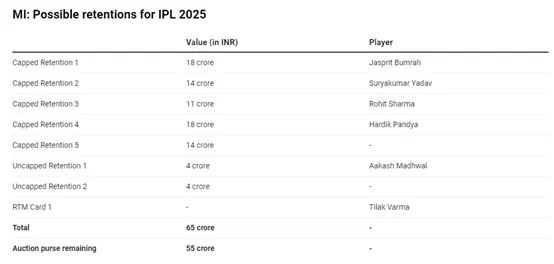
Retaining all four of these star players comes with significant financial implications. Each player commands a high salary, and retaining all four could leave Mumbai with less than half their auction purse. The franchise must balance keeping their star players while leaving enough room for auction flexibility.
Jasprit Bumrah should be the first retention, while Hardik Pandya and Suryakumar Yadav will want salaries commensurate with their market value. However, retaining all three at high prices leaves little room for Rohit Sharma, who might prefer not to continue if offered a lower retention amount.
Uncapped Talents: Madhwal, Wadhera, and Varma
Beyond the star players, Mumbai Indians must consider their rising uncapped talents.
Aakash Madhwal stands out as a prime retention target. The Indian quick has shown potential with his ability to skid the ball through, making him a valuable asset in Mumbai’s bowling arsenal. Retaining Madhwal at INR 4 crore offers Mumbai solid value for an uncapped player.
Nehal Wadhera and Tilak Varma are also on Mumbai’s radar. While retaining all three young players may be challenging, Mumbai could look to buy back Wadhera or Tilak using the Right to Match card during the auction. These young stars have showcased their abilities in recent seasons, and keeping them could strengthen the team’s long-term future.
Conclusion
Mumbai Indians face critical decisions ahead of the IPL 2025 auction. While retaining their “Big Four” is tempting, financial constraints may force them to prioritize. Jasprit Bumrah, Hardik Pandya, and Suryakumar Yadav are essential, but Rohit Sharma’s future remains uncertain. In addition, the franchise must also focus on retaining their rising uncapped stars like Madhwal and Varma. Balancing star power and budget will be key to Mumbai’s success in the upcoming season.(cricket betting tips)