A Simple Guide to How IPL Teams Build Squads Before the Auction
IPL auctions are exciting, but the real strategy often begins before the bidding starts. Retention rules, Right to Match options, salary caps, overseas slots, and squad balance all shape how each franchise enters the auction room.
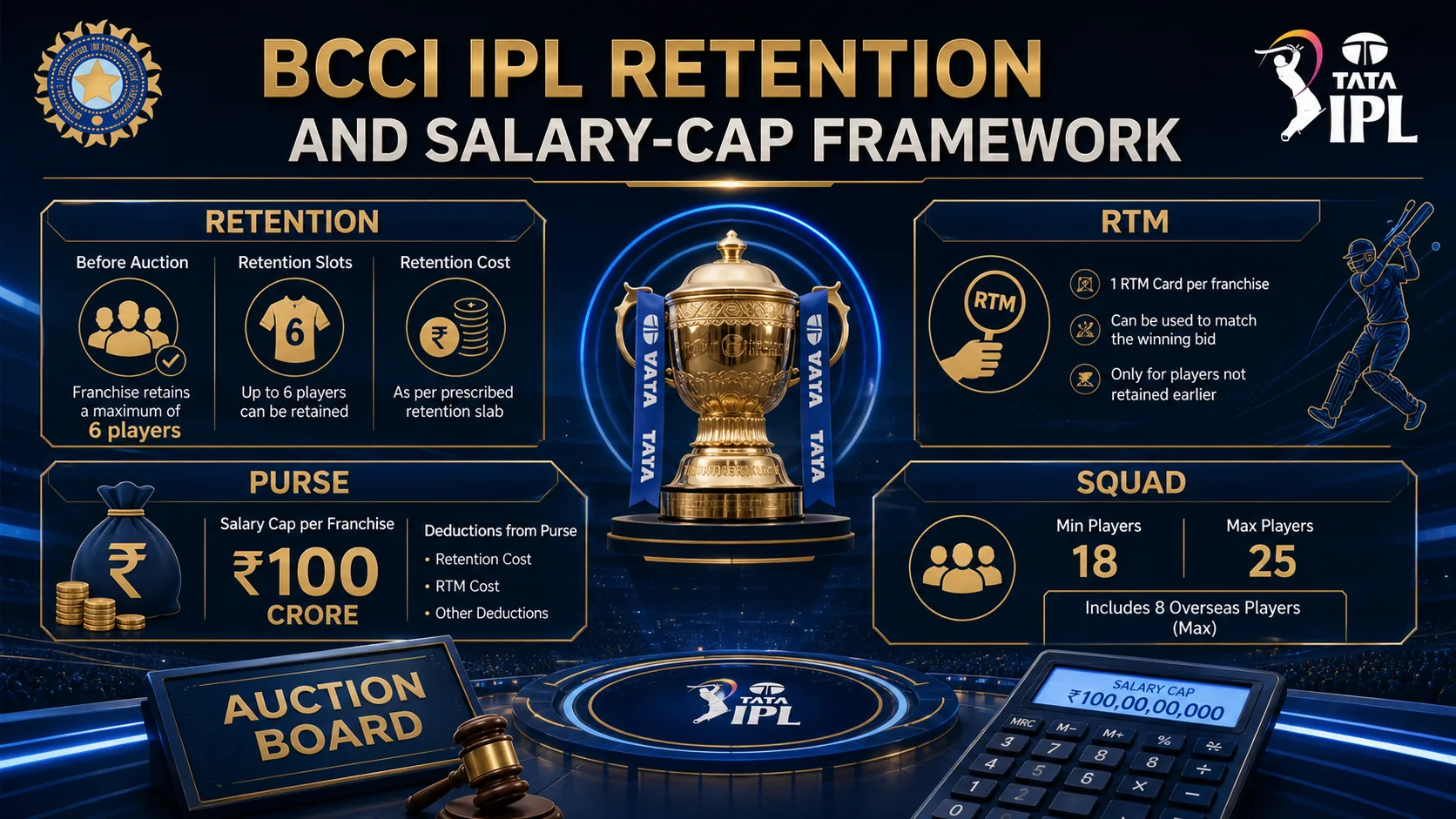
Under the IPL’s 2025–27 player regulations, franchises were allowed to retain up to six players through retention or Right to Match, with limits on capped and uncapped players. The auction purse for IPL 2025 was set at INR 120 crore, while the broader salary cap structure also includes performance pay and match fees. (iplt20.com)
For fans, understanding these rules makes team decisions easier to read. A franchise may release a popular player not because he lacks quality, but because keeping him could reduce budget flexibility elsewhere.
Why IPL Retention Rules Matter
Retention rules decide which players remain with a franchise before the auction. These choices reveal the team’s long-term core.
A side that retains its captain, wicketkeeper, lead spinner, and death bowler is usually trying to protect structure. A team that releases more players may be preparing for a larger rebuild.
That is why retention lists are not just names on paper. They show how each franchise views its next cycle.
How the Salary Cap Changes Team Planning
The IPL salary cap forces every team to think beyond star power. A marquee player can win matches, but one expensive contract can also limit how much money remains for backups, domestic depth, or specialist overseas options.
For IPL 2025, the official auction purse was INR 120 crore per team. The IPL also introduced a separate match fee of INR 7.5 lakh per match for each playing member, including the Impact Player. (iplt20.com)
This means squad planning is no longer only about auction bids. Teams must now think about total player cost, squad depth, and season-long flexibility.
Retention vs Auction: The Key Trade-Off
Every franchise faces the same question:
Should it protect proven players, or release them and create more auction room?
Keeping a strong core gives stability. It protects leadership, dressing-room chemistry, and role clarity. But it can also reduce the team’s ability to chase high-value names at auction.
Releasing players creates purse space. That gives a team more freedom in bidding wars, but it also increases risk. Once a player enters the auction pool, there is no guarantee the franchise can buy him back.
Right to Match: Why It Matters
The Right to Match option gives teams another layer of strategy. Instead of retaining every player directly, a franchise may allow a player to enter the auction and then use RTM to match the final bid.
This can be useful when a team wants to test the market value of a player. But it is risky. If another franchise pushes the price too high, matching the bid may damage the rest of the squad plan.
In the IPL 2025 mega auction, eight RTMs were used, showing how franchises used the rule selectively rather than treating it as a simple safety net. (iplt20.com)
What Fans Should Watch Before the Auction
Before reacting to the biggest names, fans should look at the squad map.
A retained list becomes more meaningful when compared with the roles still missing. For example, a team may already have top-order batting but still need a finisher. Another side may have enough overseas stars but lack Indian pace depth.
The smartest way to read an IPL auction is to follow the gaps, not just the headlines.
Key Areas to Check
| Area | Why It Matters |
|---|---|
| Remaining purse | Shows how aggressively a team can bid |
| Retained core | Reveals the franchise’s long-term plan |
| Domestic depth | Often decides balance across a full season |
| Overseas slots | Limits how teams use international players |
| Bowling roles | Death bowling and powerplay pace are usually premium |
| Finishers | Reliable late-over hitters are hard to replace |
How Salary Cap Rules Affect Squad Balance
A balanced IPL squad needs more than 11 strong players. Teams need backup batters, injury cover, role-specific bowlers, and domestic players who can step in without changing the entire XI.
That is where the salary cap becomes important.
A team that spends heavily on three or four stars may look powerful on paper, but it can struggle if the middle order, Indian bowling depth, or bench strength is thin. On the other hand, a franchise with a more even salary spread may have better flexibility across a long tournament.
Why Domestic Players Become So Valuable
Indian domestic players are central to IPL squad construction. Since only a limited number of overseas players can be used in the playing XI, franchises need reliable Indian options in key roles.
A domestic wicketkeeper, middle-order batter, spinner, or seam-bowling all-rounder can change the entire auction strategy. These players give teams more freedom to use overseas slots for match-winners.
That is why uncapped and emerging Indian players often attract serious attention, especially when multiple teams need the same role.
What Vegas11 Readers Can Follow
For Vegas11 readers following IPL team news, the best approach is to look at each franchise in three layers.
First, check the retained core. Second, review the remaining purse. Third, identify the missing roles.
This gives a much clearer picture than focusing only on famous names.
Before the Auction, Ask These Questions
| Question | What It Tells You |
|---|---|
| Which players were retained? | The team’s trusted core |
| How much purse remains? | Auction power and flexibility |
| Which roles are still open? | Likely bidding priorities |
| Are overseas slots available? | Whether the team can chase global stars |
| Is the bowling unit complete? | How much pressure remains at auction |
| Does the team have finishers? | Late-over batting strength |
Quick IPL Rule Checks
| Rule Area | What It Changes | Fan Takeaway |
|---|---|---|
| Player retention | Teams protect selected players before auction | Core squads become easier to understand |
| Right to Match | Teams can match final auction bids for eligible players | Some released players may still return |
| Salary cap | Limits total spending power | Every star signing affects the rest of the squad |
| Auction purse | Decides how much a team can bid | Bigger purse usually means more flexibility |
| Overseas slots | Controls international player balance | Squad composition matters as much as price |
| Match fees | Adds a new payment layer for playing members | Player cost is broader than auction value |
Final Thoughts
IPL retention and salary cap rules may look technical, but they explain many of the biggest franchise decisions.
A team is not only choosing its best players. It is choosing a structure, a budget plan, and a future auction strategy.
Before the next IPL auction, look beyond the biggest names. The real clues are in the retained core, the purse left behind, and the roles still waiting to be filled.
FAQ
Why do IPL retention rules matter?
IPL retention rules decide which players a franchise can keep before the auction. This affects squad stability, auction strategy, and long-term team planning.
How does the salary cap affect IPL teams?
The salary cap limits how much each franchise can spend. Teams must balance star players, domestic depth, overseas options, and backup roles within that budget.
What is Right to Match in the IPL?
Right to Match allows a franchise to match the final auction bid for an eligible player and bring him back, depending on the rules for that auction cycle.
Why do teams release good players before the auction?
A team may release a good player to create more purse space, reset squad balance, or avoid spending too much on one role.
What should fans watch before an IPL auction?
Fans should check retained players, remaining purse, overseas slots, domestic depth, and missing roles such as finishers, wicketkeepers, spinners, or death-over bowlers.