
Quick answer: This guide explains slot hit frequency vs rtp: what the two numbers mean in plain language. Exact game rules, account terms, limits, and availability can vary, so the current screen and written terms should control.
Prepared by the Vegas11 Editorial Team. Sources and limits checked August 19, 2026.
Casino games involve financial risk. Adults 18+ only. Play only where permitted, set a fixed money and time boundary before playing, and do not chase losses.
Hit frequency describes occurrence
Hit frequency is commonly used to describe how often a slot produces a credited win under a defined test or game description. It does not necessarily mean a profitable spin, a top prize, or a result that exceeds the stake.
The number can also depend on what the provider counts as a hit. A small return, a feature trigger, or another qualifying event may be treated differently. Read the game’s own explanation rather than assuming every review uses the same definition.
| Term | What to read | What not to infer |
|---|---|---|
| Displayed rule | The exact game or account condition | That similar products use the same rule |
| Timing | When a choice or request is accepted | That a result or payment is due |
| Limit | Minimum, maximum, or time boundary | That more stake creates a better outcome |
| Settlement | How the final status is shown | That an animation or headline is proof |
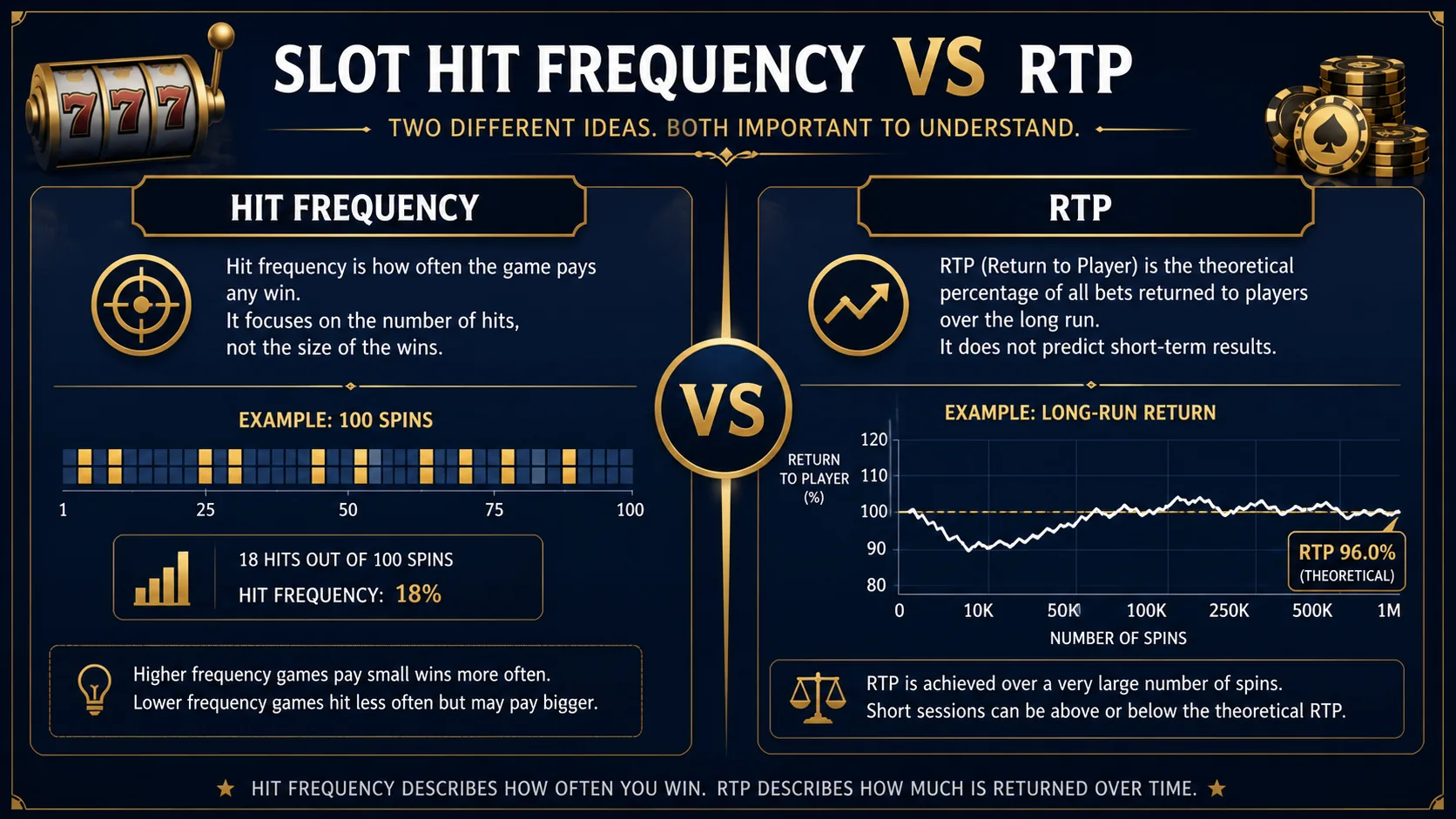
RTP describes long-run return
RTP is a long-run mathematical figure for a defined game version and rule set. It is not a promise that a particular session returns that percentage, and it does not tell you when a result will occur.
A high published RTP can still coexist with losing short sessions, while a lower figure does not predict the result of the next spin. The time horizon and the exact version are essential context.
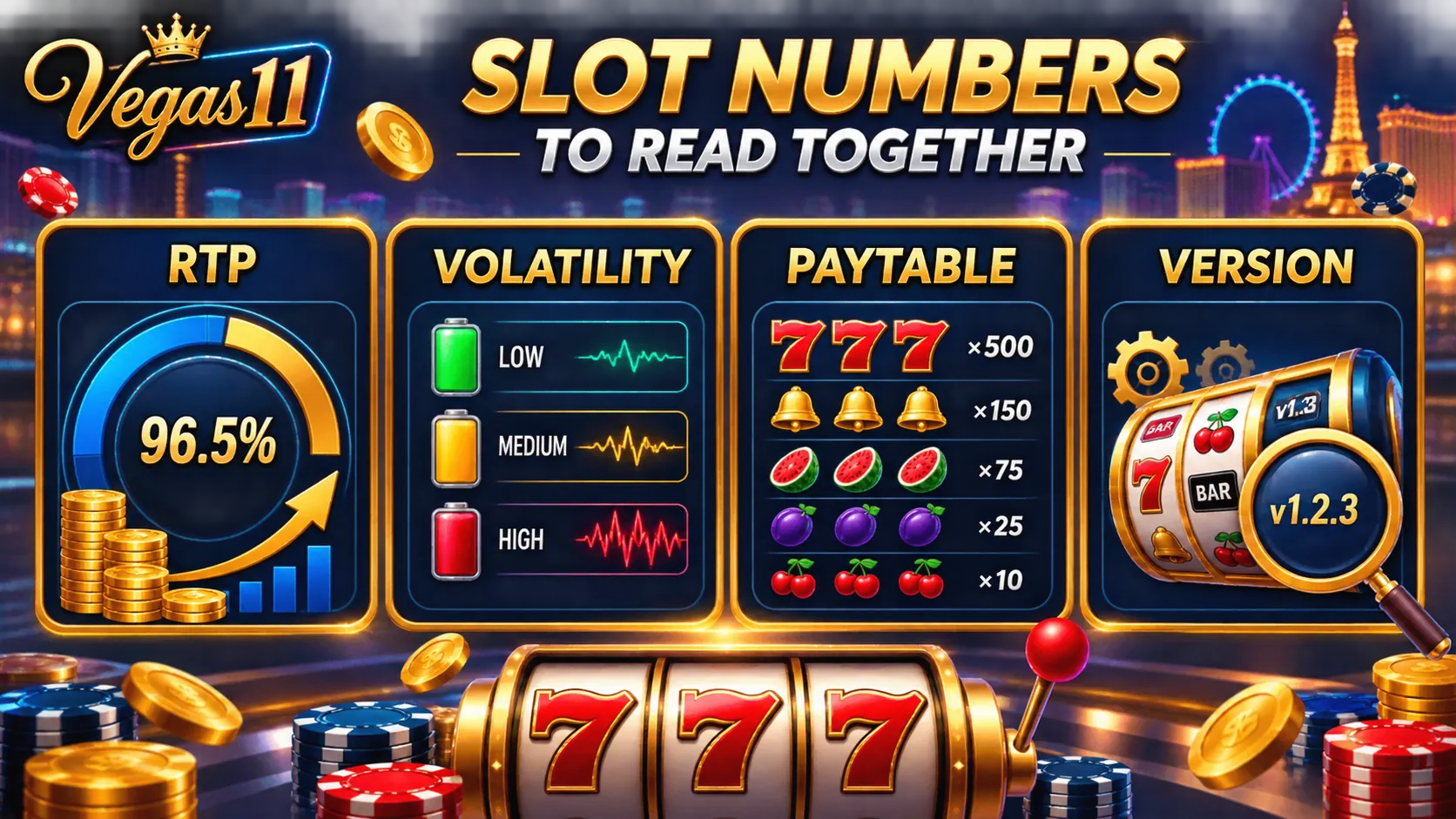
Volatility adds another layer
Volatility is often used to describe how unevenly returns may be distributed. It can help explain why two games with similar long-run figures may feel different over a short sequence, but it still does not forecast an individual outcome.
The paytable, feature rules, minimum stake, and displayed RTP should be read together. A review number from an older version may not apply to the screen in front of you.
| Before acting | Check | Keep a record of |
|---|---|---|
| Rules | The exact product or account wording | Version or update date |
| Money | Fees, stake, limit, or contribution | Amount and time boundary |
| Access | Verification, device, or support route | Ticket or round ID |
| Afterward | Settlement or account status | Screenshot or confirmation |
What the numbers cannot do
Neither hit frequency nor RTP can identify a due result, a safe session, or a reliable staking decision. Previous spins remain a record of what happened, not a credit that changes the next independent result.
Use the numbers for description, keep the money and time boundary fixed, and stop when that boundary is reached.
Frequently asked questions
Do the displayed terms apply everywhere?
Not necessarily. The exact game, account, operator, market, and current version control the terms.
Can one number predict my session?
No. A published figure describes a defined rule set or long-run concept, not an individual result.
What if a rule is unclear?
Pause and use the official help or support route before acting.
Should I save the terms?
Yes. Keep the version date, screenshot, confirmation, or ticket number when available.
What is the practical control?
Set a fixed money and time boundary and stop when either boundary is reached.
Source and update note
This article is informational and time-qualified. Current game, account, payment, and responsible-play terms control over this general explanation. Sources checked: source 1, source 2.