
Quick answer: This guide explains online casino kyc: what identity verification usually requires in plain language. Exact game rules, account terms, limits, and availability can vary, so the current screen and written terms should control.
Prepared by the Vegas11 Editorial Team. Sources and limits checked August 19, 2026.
Casino games involve financial risk. Adults 18+ only. Play only where permitted, set a fixed money and time boundary before playing, and do not chase losses.
KYC is a verification process, not a universal document list
Online gambling businesses may need to confirm a customer’s age and identity before gambling or before certain account actions. The documents requested can vary by operator, market, account details, and the reason for the review.
A general article can explain the process, but it cannot promise that one passport, address document, or selfie will satisfy every check. Read the current request and use the official upload route.
| Term | What to read | What not to infer |
|---|---|---|
| Displayed rule | The exact game or account condition | That similar products use the same rule |
| Timing | When a choice or request is accepted | That a result or payment is due |
| Limit | Minimum, maximum, or time boundary | That more stake creates a better outcome |
| Settlement | How the final status is shown | That an animation or headline is proof |
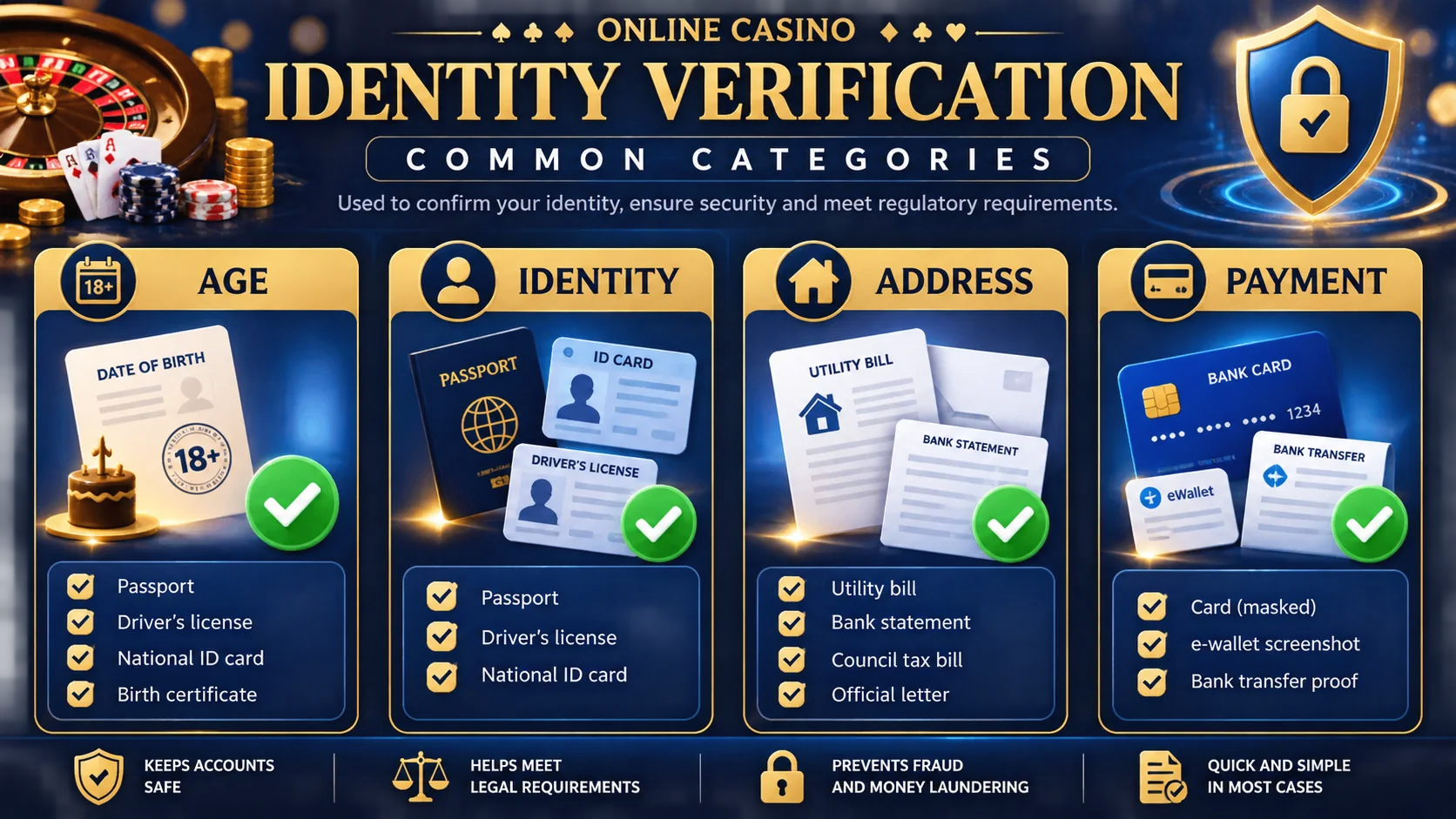
Common categories of information
A request may cover identity, age, address, payment ownership, or account activity. A passport or driving licence can be used in some settings; a household bill or bank statement may be requested for address. The exact accepted documents and date limits belong to the operator’s current terms.
Before uploading anything, check the domain, the support message, the file requirements, and whether sensitive details should be masked. Do not send documents to an unknown address simply because a message uses familiar branding.
Why a review can happen later
Verification can occur at sign-up, before a withdrawal, after a change in payment details, or when the account needs a further review. A later request does not by itself prove wrongdoing, but it does mean the account action may wait until the check is complete.
Keep the request, submission date, ticket number, and any follow-up message. Those records make a support conversation clearer than a memory of what was uploaded.
| Before acting | Check | Keep a record of |
|---|---|---|
| Rules | The exact product or account wording | Version or update date |
| Money | Fees, stake, limit, or contribution | Amount and time boundary |
| Access | Verification, device, or support route | Ticket or round ID |
| Afterward | Settlement or account status | Screenshot or confirmation |
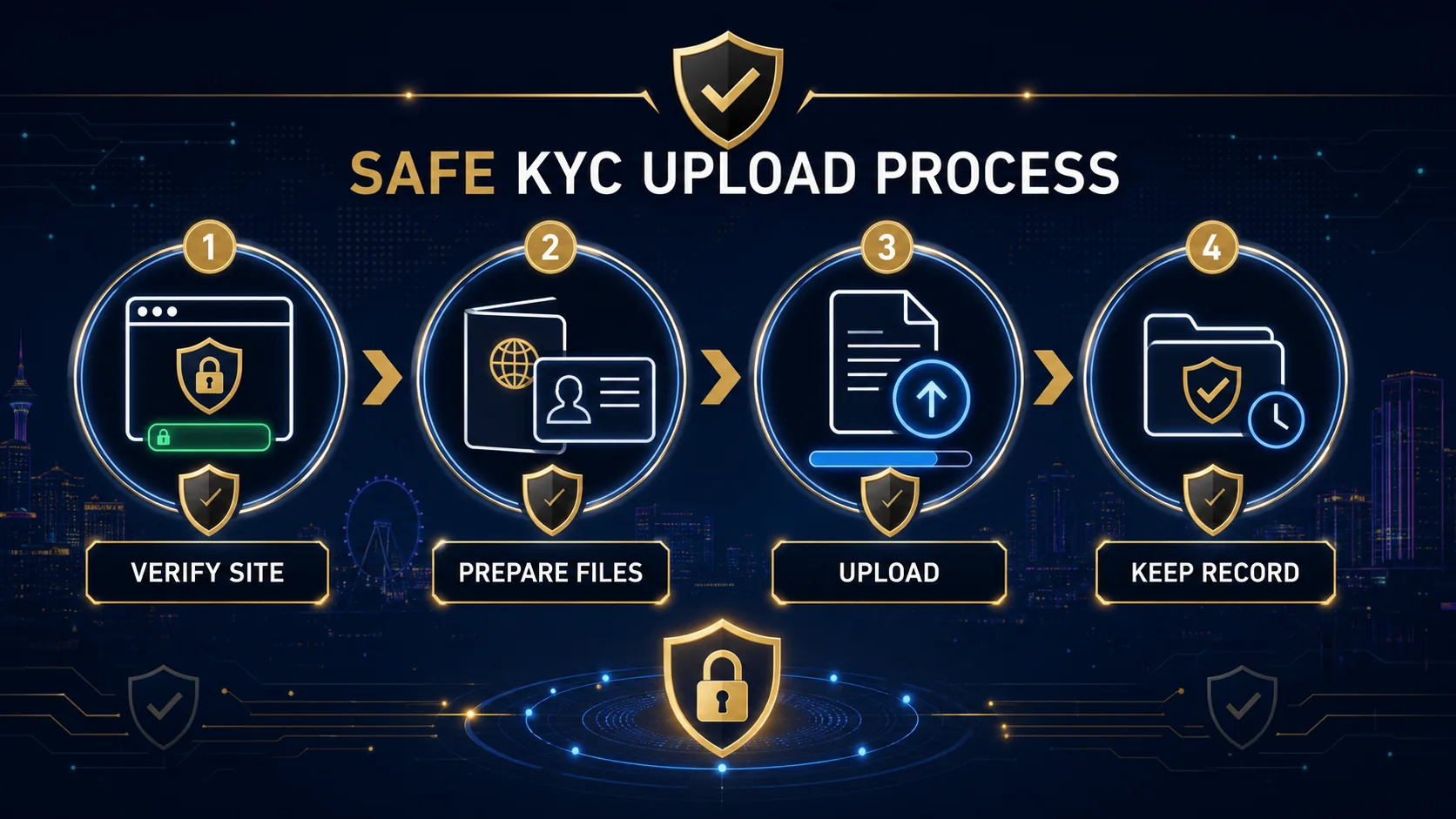
A safer verification checklist
Confirm the official route, read the privacy notice, prepare only the requested documents, use clear files, and ask support if the request is ambiguous. Avoid sharing passwords, one-time codes, or payment PINs as part of a document check.
KYC is an account-readiness issue. It should be understood before a payment question appears, not treated as a shortcut around the written rules.
Frequently asked questions
Do the displayed terms apply everywhere?
Not necessarily. The exact game, account, operator, market, and current version control the terms.
Can one number predict my session?
No. A published figure describes a defined rule set or long-run concept, not an individual result.
What if a rule is unclear?
Pause and use the official help or support route before acting.
Should I save the terms?
Yes. Keep the version date, screenshot, confirmation, or ticket number when available.
What is the practical control?
Set a fixed money and time boundary and stop when either boundary is reached.
Source and update note
This article is informational and time-qualified. Current game, account, payment, and responsible-play terms control over this general explanation. Sources checked: source 1, source 2.